
Signed Isn’t Done: Where Enterprises Really Lose Money on Contracts
Every large company celebrates the signature. The deal is closed, the PDF is filed, and everyone moves on.
That is exactly where the losses begin.
Inside every signed contract sit dozens of promises: a delivery date, a monthly report, an insurance certificate, a payment term, a renewal notice, a penalty clause. Each one needs someone to own it, someone to follow up, and proof that it was done. In most enterprises, nobody owns them. They live in inboxes, spreadsheets and people’s memory.
The result is familiar to every CFO and General Counsel:
- Vendors deliver late, and the penalty clause is never invoked.
- Renewals roll over on old terms because no one noticed the notice date.
- Regulator and court deadlines are met at the last minute, or missed.
- When an auditor asks for proof, a team spends days digging through mail.
The gap is execution, not drafting
Companies have spent years making contracts faster to draft and sign. Very little has gone into making sure what was signed actually gets delivered.
This is the problem an Execution Operating System solves. Like an ERP runs the money and a CRM runs the customers, an Execution OS runs the promises:
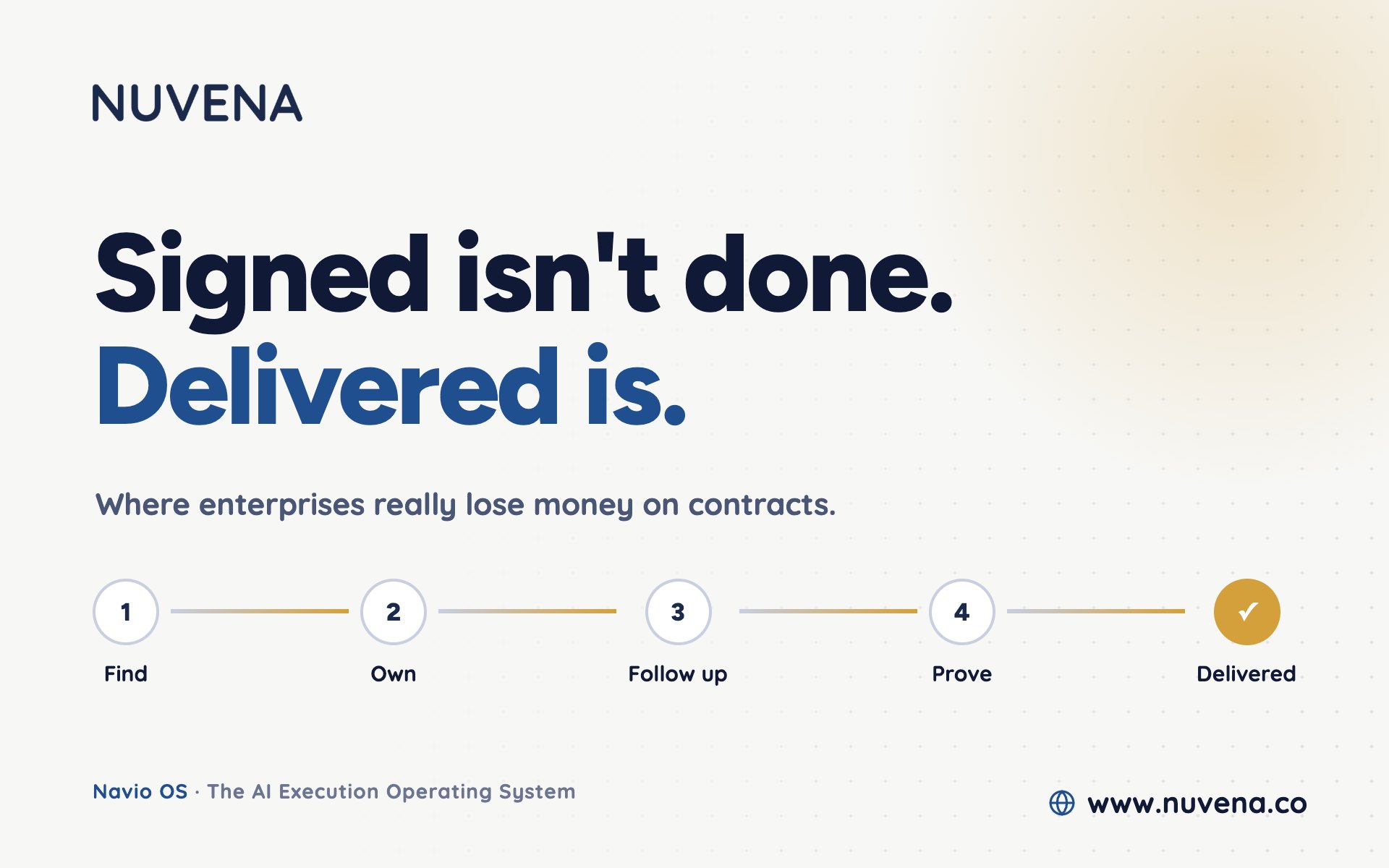
- Find: AI reads every contract, email and meeting note and lists each commitment.
- Own: each commitment gets an owner and a date.
- Follow up: reminders and escalations run on their own, so no one chases.
- Prove: work closes only with proof attached.
- See: leaders get one view of what’s on time and what’s at risk.
When execution becomes a system rather than a habit, money stops leaking quietly after the signature.
Signed isn’t done. Delivered is.